

Lessons From Breach Response: Why Proactive Beats Reactive Every Time
- December 26, 2025
Introduction
Breach response is the moment when an organization’s true security posture comes into focus. Not the posture reflected in slide decks, policies, or roadmap updates, but the one that emerges under pressure, when a real attacker forces teams to act quickly and with incomplete information. By the time most breaches are discovered, intruders have already spent considerable time inside the environment, moving quietly, collecting access, and preparing their next step. The early hours of response reveal how well the organization can regain control before the situation escalates.
Those first minutes and hours after detection expose far more than technical capability. They reveal how decisions move across teams, how leaders absorb uncertainty, and how quickly groups can coordinate without hesitation. Communication paths that once seemed clear suddenly feel slow. Ownership that looked defined on paper becomes murky. Processes that felt sturdy in theory turn rigid or confusing under real-world speed.
Many organizations enter incidents with confidence because they have tools, dashboards, playbooks, and documented procedures. The problem is that more often than not that breach is the moment they realize how rarely those procedures were practiced, how ambiguous the ownership chain actually is, and how easily assumptions slip into the background when everything is calm. Under pressure, the gaps show immediately.
Across every incident Canary Trap has supported, one pattern repeats: response strength develops long before an attacker appears. The organizations that perform well didn’t rely on adrenaline or last-minute coordination. Instead, they built clarity, communication habits, and decision-making structure long before they needed them.
In this blog, we will be exploring the lessons learned from real breach response scenarios and will highlight what separates organizations that scramble from those that respond with precision and control.
- The Reality of Breach Response: Where Organizations Break Down
When a breach hits, organizational stress fractures appear almost immediately. It’s a collision between pressure, speed, and misalignment. Breach response condenses decision-making into minutes and forces every team to act with partial information, and this environment exposes any structural weakness that normally hides beneath day-to-day operations. What feels like a manageable inefficiency in calm periods becomes a genuine barrier when an attacker is active inside the environment.
A common starting point is interpretive drift, or different teams looking at the same situation through their own lens. For instance:
- Security seeing threat activity.
- IT seeing service disruption.
- Leadership seing business exposure.
Each interpretation is valid, but the lack of a shared frame creates friction. Without a unified narrative, teams move at different speeds and make decisions based on competing assumptions about risk and urgency.
Conflicting priorities then surface, often within minutes:
- Engineering pushing to protect uptime.
- Security pushing to contain the threat.
- Legal pushing for certainty.
- PR pushing for narrative control.
- Business leaders pushing to maintain continuity.
No one is acting irrationally; each group is defending the outcome they’re accountable for. But without a predefined hierarchy of decision-making, these priorities collide right when alignment is most critical.
Another recurring issue is desensitization. Security teams may have raised concerns for months, but in organizations that lack cross-functional urgency, these warnings gradually become routine checklist items. When a breach finally occurs, teams end up realizing too late that indicators were visible long before the incident escalated.
Silent disagreements can also emerge at the worst possible moment. Debates about acceptable downtime, response scope, asset criticality, or containment strategy can suddenly appear mid-response because they were never resolved beforehand. These disagreements consume time that should be spent controlling the situation.
These breakdowns aren’t purely technical. They reflect organizational structure and cultural habits. Breach response amplifies these issues. The organizations that struggle most are the ones that equated “documentation” with “readiness,” when actual readiness depended on alignment long before an incident occurred.
- What Reactive Security Looks Like
Reactive security becomes visible the moment an organization is forced to operate under pressure. Tools that seem reliable during quiet periods suddenly feel disconnected from the decisions that need to be made, and teams start relying on instinct rather than coordination. In these environments, the first signs of a reactive posture don’t appear as technical failures, but as moments where people hesitated, debated, or reinterpreted information differently. That hesitation widens the attacker’s window.
This usually begins with decisions shaped more by emotion than strategy. When teams don’t share the same thresholds for action or a unified understanding of escalation, they make choices based on fear of disrupting the business, fear of choosing wrong, or fear of triggering unnecessary downtime. Those decisions are made in isolation, without context, and without the clarity that comes from a consistent cross-functional playbook.
As the response unfolds, organizations start to uncover weaknesses they never actively acknowledged, such as: incomplete logs that complicate reconstruction, cloud workloads no one fully tracked, privileged accounts that were granted for specific projects and quietly remained, or internal exceptions to MFA created during a crisis and forgotten later. These blind spots often existed for months, but reactive environments only reveal them once attackers exploit them.
Communication becomes one of the most visible points of failure. Without a single authoritative channel, updates scatter across Slack threads, side messages, hallway conversations, and outdated email chains. Work gets duplicated, evidence gets lost, and decisions lag because no one is certain which piece of information is current.
This isn’t speculation; research continues to confirm the role that weak communication plays in deteriorating a response. As one global study by Kaspersky found, “miscommunications in IT security lead to cybersecurity incidents in 62% of companies.” That number underscores how structural the problem is: misalignment is often a major contributor to the breaches.
Escalation pathways break down as well. Teams aren’t sure who can authorize high-impact containment actions or who has the authority to notify regulators or external partners. Decisions either stall waiting for approval or escalate too broadly because no one wants to be responsible for slowing down the response.
What emerges is a picture of reactive security that is less about the absence of capability and more about the absence of orchestration. If the organization is uncoordinated, that lack of cohesion can become the greatest advantage for an attacker.
- What Proactive Security Looks Like
Proactive security doesn’t promise a breach-free world, but it builds an environment that responds with structure rather than panic. It emphasizes systems, rehearsal, and clarity so when something goes wrong, teams know what to do, and everyone knows who’s doing it.
Here are the traits that define a proactive posture:
- Preparation Without Prediction
Security doesn’t try to guess exactly how the next attack will play out. Instead, it builds adaptable processes, defined authorities, and communication flows that work no matter what changes.
- Clear Roles and Responsibilities
Every team, including: engineering, IT operations, security, legal, and communications, has defined ownership over parts of the response: containment decisions, forensic tracking, customer communication, recovery sequencing. No ambiguity, no “who does what” debate when time is critical.
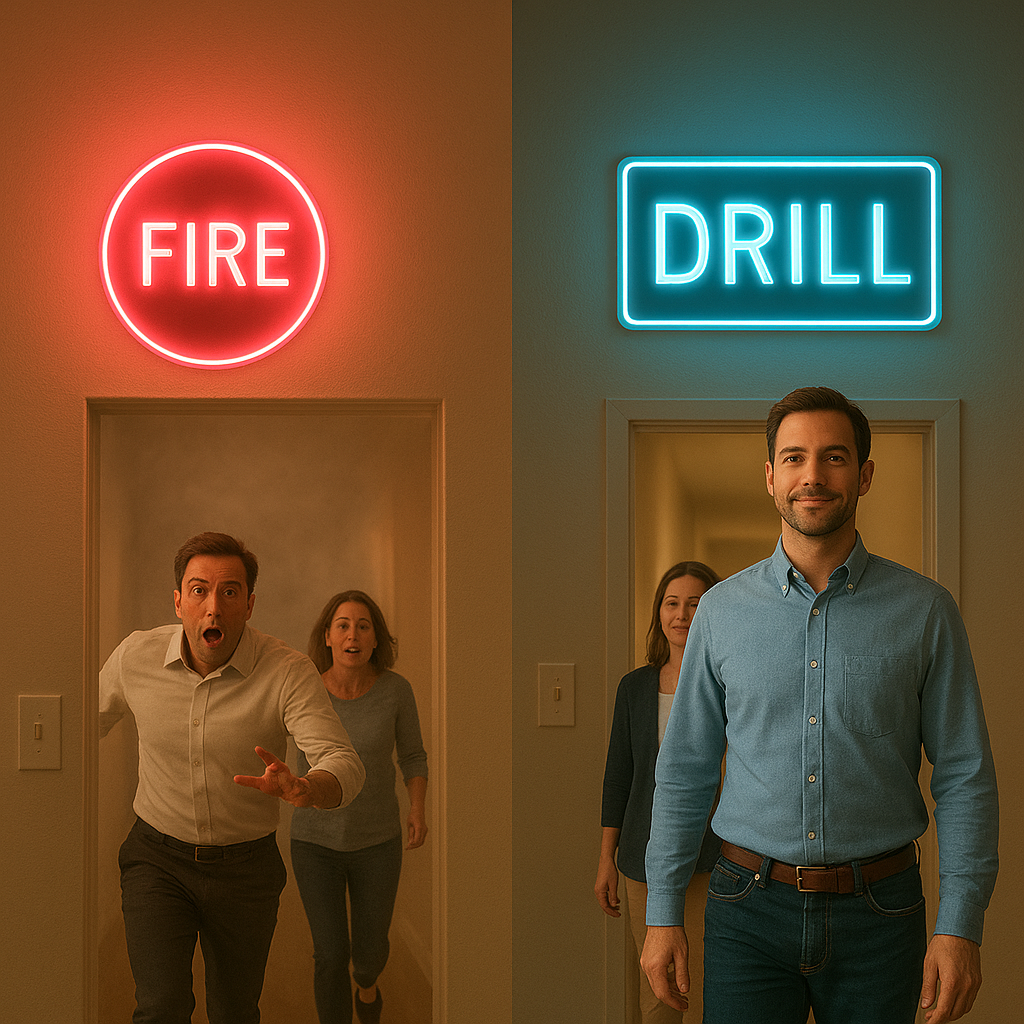
- Regular Drills and Readiness Practice
Tabletop exercises, simulated attacks, purple-team drills and response walkthroughs turn theory into muscle memory. These exercises can help reveal friction early, at least before a real incident forces teams to scramble. As one recent guide on security exercises explains, these practices “often expose communication gaps, procedural inconsistencies, and real-world friction points long before attackers show up.”
- A Unified Threat Narrative Across the Organization
Everyone understands the real risks: which assets matter most, where the likely attack paths are, and what “acceptable risk” looks like. That shared context keeps priorities aligned.
- Security Is Embedded in Business Planning
Security becomes part of every deployment, vendor integration, product launch, or infrastructure change. Instead of being an afterthought, it’s an early consideration, so unexpected dependencies or uncontrolled exposures don’t slip in under pressure.
- Predictable Execution Under Pressure
When alerts escalate, proactive teams shift into a practiced rhythm: assessing the situation, containing what’s exposed, communicating clearly, validating progress, and moving into recovery with confidence. This sequence becomes familiar through repetition, which reduces hesitation and keeps teams focused on the next action rather than debating the starting point. Even in complex incidents, this rhythm creates momentum instead of uncertainty.
A mature proactive posture gives organizations something more valuable than speed. It gives them consistency. Roles are clear, communication moves through established channels, and decisions follow a known hierarchy. Teams then can act with a shared understanding of what matters most and how to protect it. That cohesion becomes the real advantage; a foundation that turns pressure into coordinated movement rather than fragmented reactions. Organizations operating this way navigate incidents with clarity, preserving critical time, and maintaining control even when attackers attempt to destabilize the environment.
- Lessons Learned From Real Breach Responses
Across breach investigations, recovery efforts, and strategic readiness engagements, at Canary Trap we consistently see the same patterns repeat themselves, often across organizations of completely different sizes, industries, and maturity levels. These recurring lessons shape whether a company stabilizes quickly or loses days, sometimes weeks, to confusion and misalignment. Breaches vary, but the structural weaknesses they expose are remarkably consistent.
- Defining Containment Authority Early
One of the clearest lessons is that containment authority must be defined far earlier than most organizations assume. During high-pressure incidents, minutes matter, yet those minutes are often spent debating who can approve isolating a production system or pulling a compromised server offline. When authority is determined by hierarchy instead of severity, teams hesitate, escalation chains elongate, and attackers gain more time to move laterally.
- Visibility in Investigative Speed
Just as important is the role of visibility in shaping investigative speed. Cases such as short log retention, inconsistent logging across cloud and on-prem environments, or telemetry that is centralized in name, will only force responders to reconstruct timelines with guesswork. Security teams often believe they have strong coverage until the breach reveals gaps across identity, network, and workload activity. As noted in a recent article by PR Newswire, “visibility gaps remain one of the most common factors slowing down breach investigations, often stretching containment efforts by days or weeks.”
- Forgotten Corners
Attackers know exactly where those weaknesses tend to live. They target forgotten corners, such as: unmonitored cloud accounts, inactive but still-enabled VPN profiles, legacy servers never fully decommissioned, and administrative accounts that remain untouched because no one wants to disturb a fragile system. These aren’t edge cases; they are among the most common initial access points uncovered during breach investigations.
- Communication
Communication also becomes a defining variable. When there is no single authoritative channel and no predictable update cadence, teams begin generating their own status threads, creating parallel narratives of the same incident. This noise slows decision-making and increases the risk of contradictory actions. In contrast, an established communication structure with one channel, one cadence, and one owner, removes unnecessary friction and allows leaders to focus on strategy rather than message triage.
- Recovery
Recovery introduces its own challenges as well, especially when business priorities haven’t been pre-established. Without a predetermined sequence for bringing systems back online, recovery devolves into a negotiation between departments rather than a coordinated technical plan. Teams begin pushing for their own systems to come first, unaware of downstream dependencies or operational risks. When priorities are not documented ahead of time, recovery expands from a technical exercise into a political one.
- Structured Learning
Finally, long-term improvement depends on structured learning. Post-incident reviews that only identify the “root cause” or focus on individual mistakes leave deeper organizational weaknesses untouched. The teams that evolve the fastest treat incidents as opportunities to refine workflows, clarify responsibilities, and correct systemic assumptions that existed long before the breach.
Every breach becomes an X-ray, revealing how the organization actually operates under pressure. The strongest teams study that X-ray, translate the insights into action, and walk away with a clearer blueprint for resilience.
- Conclusion
Across every case study, breach simulation, and real-world compromise, one pattern repeats: effective breach response has far less to do with the severity of the attack and far more to do with the organization’s internal alignment.
We’ve explored how the gap between reactive vs proactive security is not defined by tools, budgets, or even team size; it’s actually defined by whether an organization can make clear, confident decisions under pressure. When authority is ambiguous, communication is fragmented, or visibility is incomplete, even well-resourced teams struggle. However, when roles, processes, and recovery priorities are established in advance, teams can move with the kind of precision attackers can’t easily disrupt.
Proactive security creates an environment where investigations start faster, isolation decisions happen earlier, and recovery unfolds in a deliberate, coordinated sequence. Proactive organizations don’t rely on hope or heroics. They operate from a shared threat narrative, maintain coherent visibility across systems, and regularly rehearse how they’ll respond when an incident occurs. That preparation transforms breach response from a chaotic scramble into a structured, strategic operation.
These lessons aren’t abstract. They come directly from the recurring patterns revealed during forensic investigations and incident recovery efforts. Attackers consistently exploit forgotten cloud accounts, legacy systems, and unmonitored spaces. They capitalize on teams being slow to align or unsure who can authorize high-impact actions. And when communication fractures across multiple channels, momentum stalls at the exact moment clarity is most critical. Every breach becomes a mirror, reflecting how well, or in some instances, how poorly an organization is prepared to operate during stress.
This is the capability Canary Trap helps organizations develop. Our work inside real incidents, threat simulations, and purple team operations gives us a front-row view into what actually works under stress. We help teams evolve from reactive postures to proactive readiness, creating an environment where communication is structured, authority is predefined, and response sequences are practiced until they become instinctive. The result is a security posture that maintains direction even when circumstances shift quickly.
SOURCES:
https://www.pwc.com/th/en/press-room/press-release/2024/press-release-08-11-24-en.html